
By Varun Modgill ·
The Role of Emotional Intelligence in Recruitment: Why EQ Matters for Freshers and Recruiters
Each year, India's universities produce millions of graduates ready to enter the workforce—armed with degrees, technical certifications, and an eagerness to prove themselves. For recruiters, the challenge isn't a lack of talent. It's that, more often than not, everyone looks equally qualified on paper.
But resumes rarely tell the full story.
While academic achievements reflect knowledge, they don't reveal how a candidate responds to feedback, works under pressure, or collaborates with others. And yet, these very traits—adaptability, empathy, resilience—are what often make the difference between a hire that sticks and one that doesn't.
That difference lies in emotional intelligence.
Understanding Emotional Intelligence
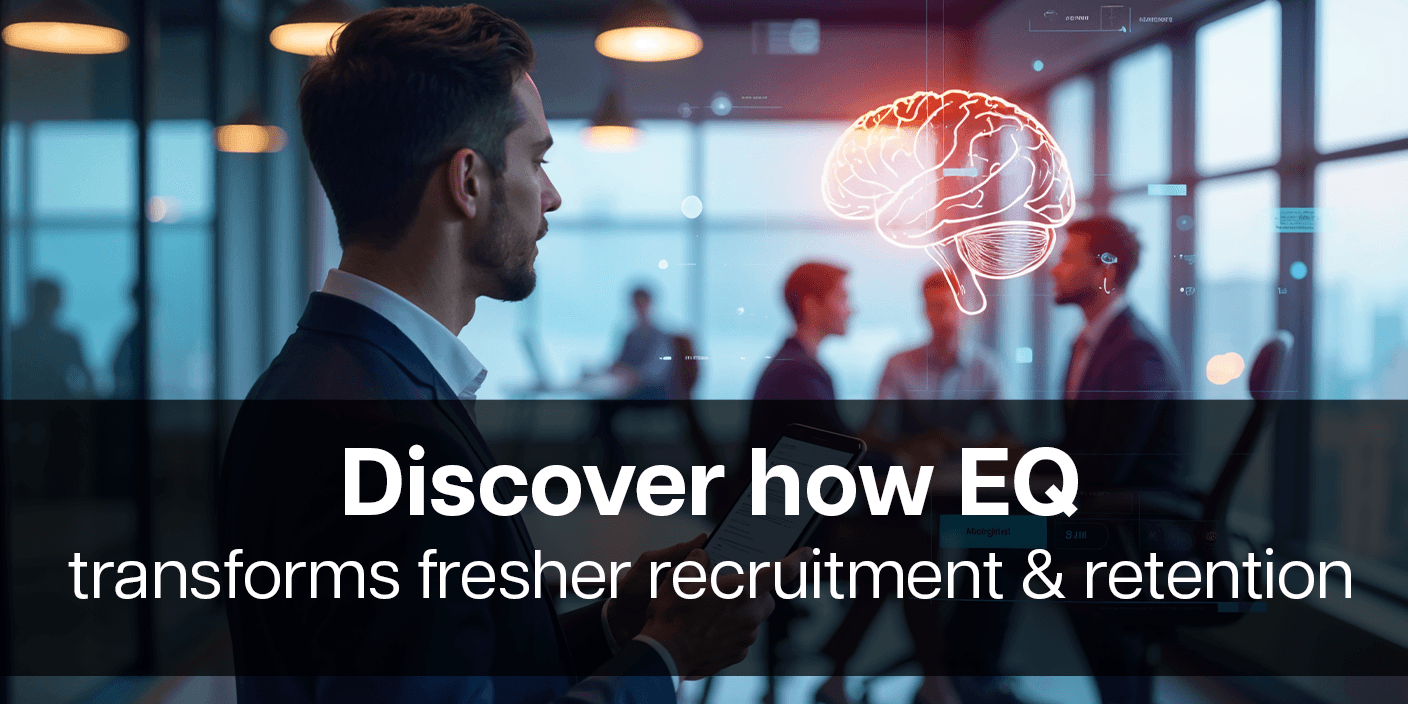
Also known as EQ, emotional intelligence is the ability to understand, manage, and express emotions effectively. It affects how individuals navigate workplace relationships, handle conflict, and approach challenges. According to a TalentSmart study, 90% of top performers across industries score high in emotional intelligence, while only 20% of low performers do. This tells us that EQ isn't just a "nice to have"—it's a core driver of success, especially in entry-level roles where pressure, ambiguity, and team dynamics are constant.
Employer Perspectives on EQ
A CareerBuilder survey supports this shift: 71% of employers said they value emotional intelligence over IQ when it comes to hiring and promotions. These employers report that emotionally intelligent employees are more likely to stay calm under pressure, resolve conflicts efficiently, and show empathy toward colleagues—all crucial in today's fast-paced, people-driven workplaces.
The Current Recruitment Challenge
And yet, despite this awareness, EQ often goes unmeasured in the hiring process. Traditional campus recruitment models are still built around test scores and short interviews, which don't capture a candidate's emotional maturity or interpersonal skill. This mismatch results in companies onboarding candidates who may check every technical box but struggle with communication, adaptability, or collaboration. It's not uncommon for freshers to leave within the first 6–12 months—not due to a lack of skill, but a lack of readiness.
Emerging Solutions
The question is no longer if emotional intelligence matters in fresher hiring—it's how to identify and assess it at scale. That's where newer, more adaptive recruitment models are beginning to shift the landscape. Platforms that integrate behavioral analytics, soft skill assessments, and AI-based interaction mapping are giving companies a more holistic view of each candidate—not just what they know, but how they think and interact.
Impact and Future of EQ in Hiring
Organizations that are early adopters of such models are already seeing the difference: higher retention, better team integration, and improved onboarding success rates. According to Deloitte's 2023 Global Human Capital Trends, companies that prioritize human skills—like emotional intelligence—see a 25% increase in long-term employee performance and a significant reduction in early attrition.
Conclusion
While the concept may feel progressive, the need is immediate. The hiring ecosystem is evolving, and emotional intelligence is no longer a secondary trait—it's becoming a competitive advantage.
Today, companies that are looking to build future-ready teams aren't just asking, "What can this candidate do?" They're also asking, "Who will this candidate become?"
Proud Moment for Cognavi India!
At the recent CII Conference on Driving Workforce Innovation, our MD & CTO Mr. Varun Modgill shared key insights on how AI is transforming HR and redefining the future of talent acquisition and workforce management.
He highlighted three major challenges companies face today—speed, scalability, and accuracy—and how AI-driven solutions by Cognavi are addressing them by optimizing recruitment strategies and improving workforce efficiency.
Importantly, he addressed the common concern around AI replacing jobs and emphasized that AI is here to augment human intelligence, not replace it.
We're proud to be driving the future of HR through innovation.
For more information, please refer to: https://www.cognavi.com/news/hr
Where this goes next
Graduate hiring for enterprisesSee how Skill Tree matching delivers a shortlist of verified engineering graduates instead of a keyword-filtered pile of resumes.
Written by
Varun ModgillManaging Director, Cognavi India
Varun Modgill is Managing Director of Cognavi India, where he leads the skills-first hiring platform connecting engineering graduates, universities and enterprises across India and Japan. He writes on campus hiring, skills-based assessment and the graduate talent market.